Search "custom printed tees" and you'll get hundreds of options within seconds which is exactly the problem. Plenty of sites promise personalised t-shirts, but the actual quality, print durability, and design options vary wildly between them, and most of that difference is invisible until the tee actually arrives at your door.
This guide breaks down what genuinely separates a good custom printed tee from a disappointing one, so you know exactly what to check before you place an order. Whether it's a one-off gift, a matching set for a group, or just something you want printed for yourself, the same handful of details end up deciding whether you're happy with what turns up and most of them have nothing to do with how nice the design looks on a screen. By the end of this, you should be able to look at any listing and quickly tell whether it's genuinely worth ordering or just another design template dressed up as something custom.
The Design Isn't the Only Thing That Matters
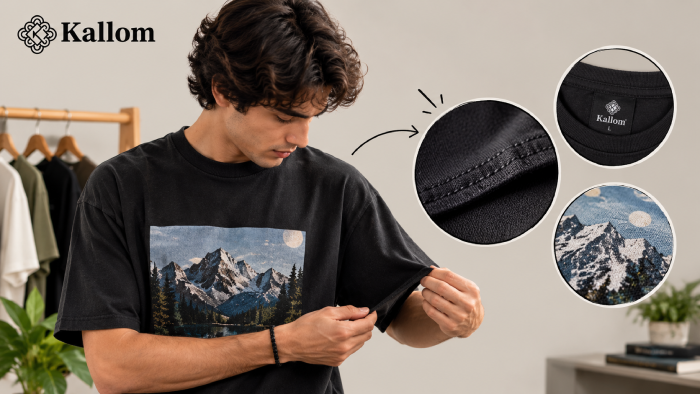
A striking design means nothing if the print itself doesn't hold up. The base fabric matters just as much as the artwork sitting on top of it a thin, cheap tee will look flat no matter how good the design is, while a premium loop terry fabric gives the print something worth being printed onto in the first place.
Fit matters too, since an oversized or boxy cut changes how the design sits and reads once it's actually worn rather than just viewed on a screen the same reason custom embroidered hoodies why they are trending in the UK has become such a common search, since people are realising fit and fabric matter as much as the design itself. A tee that fits well and hangs properly makes even a simple print look considered, while the same design on a poorly cut garment can look like an afterthought.
Your Pre-Order Checklist
A few practical checks separate a genuinely good order from a regrettable one:
- Fabric weight and composition — thin, cheap fabric makes even a great design look flat
- Print method — direct-to-garment tends to look sharper than basic heat transfer for detailed designs
- A live preview before production — so there are no surprises once it arrives
- Clear sizing information — it's worth taking a moment to check the size guide rather than guessing between fits
- Turnaround time — especially if the tee is needed for a specific date
- Return policy — a straightforward exchange process matters more than people expect, particularly for sizing gambles
Running through this list before ordering takes a couple of minutes, but it's usually the difference between a tee that gets worn regularly and one that ends up at the back of a drawer. It's easy to skip these checks when a design looks good on screen, but the design is only ever half the story the garment underneath it does just as much work in how the final piece actually feels and holds up.
The One Detail Most Buyers Overlook
Print quality is where most of the actual difference between sites shows up, even though it's the hardest thing to judge from a product photo alone. A high-quality print should sit smoothly on the fabric without cracking, peeling, or fading noticeably after a handful of washes, while a poor one starts looking tired within a few wears regardless of how sharp it looked on day one.
If you don't know what is embroidery and how it compares as an alternative, it's worth knowing that print and embroidery aren't competitors so much as different tools built for different jobs. Print suits detailed, colourful, or photo-based designs that embroidery simply can't replicate with the same clarity, while embroidery suits simpler text or logos built for long-term durability. Neither is universally "better" ; the right choice depends entirely on what the design actually needs to do.
How Much Should You Actually Pay?
Pricing for custom printed tees varies more than most buyers expect, and a higher price doesn't always mean better quality:
- Budget options (under £15) — often use lower-grade fabric and basic heat-transfer printing, which tends to crack or fade faster
- Mid-range options (£15-£25) — usually reflects a reasonable balance of fabric quality, print method, and genuine customisation
- Premium options (£25+) — worth it mainly when it includes better fabric, hand-finishing, or specialist print techniques, not just branding
- Watch for hidden costs — delivery fees and rush-order charges can quietly push a "budget" tee above a mid-range option
The goal isn't to chase the cheapest option or assume the most expensive one is automatically best, it's matching the price to what you're actually getting for it. A tee priced fairly for genuine quality will almost always outlast and out-perform a cheaper alternative that looks similar in a product photo but falls apart after a few washes. The same value-over-price logic applies if you're also weighing up a sweatshirt vs hoodie difference for a heavier piece, since the same fabric-and-finish trade-offs decide whether it's worth the extra few pounds there too.
Can You Really Customise It Your Way?
Not every "custom" tee offers the same level of actual customisation. Before ordering, it's worth checking what's genuinely adjustable:
- Text and wording — can you add your own name, date, or phrase, or only pick from templates
- Colour options — for both the print and the base garment
- Placement — front, back, or smaller pocket-style prints
- Photo uploads — not every site supports genuine photo printing, so check before assuming it's included
If a site supports proper customisation, it's usually worth the extra step to customise your clothes fully rather than settling for a near-match template that only looks personal at a glance.
The Best Times to Order One
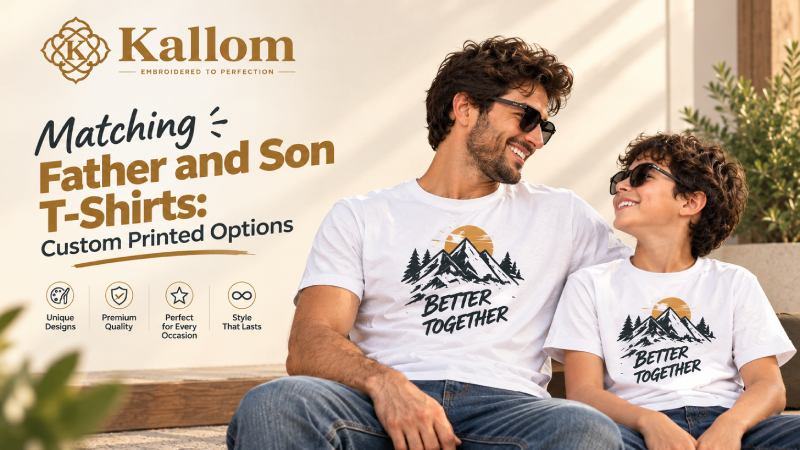
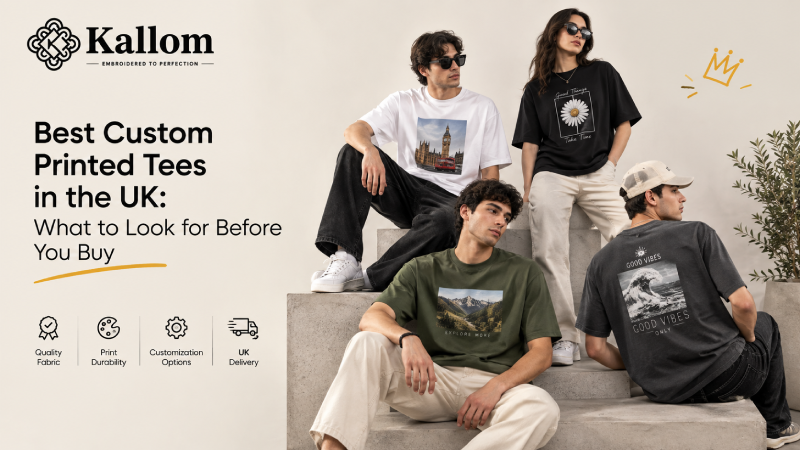
Custom printed tees aren't limited to one specific use case, which is part of why they've become so popular. Birthdays, group trips, and family events all suit a matching set, and the same logic behind matching custom printed tee designs for families works just as well for friend groups or work teams. Beyond planned occasions, a lot of people simply order one because a specific photo or phrase means something to them personally, with no event attached to it at all and that's arguably where a custom tee feels most worth it, since the design wasn't made to fit an occasion, it was made because it mattered.
Photo or Text: Which One Should You Choose?
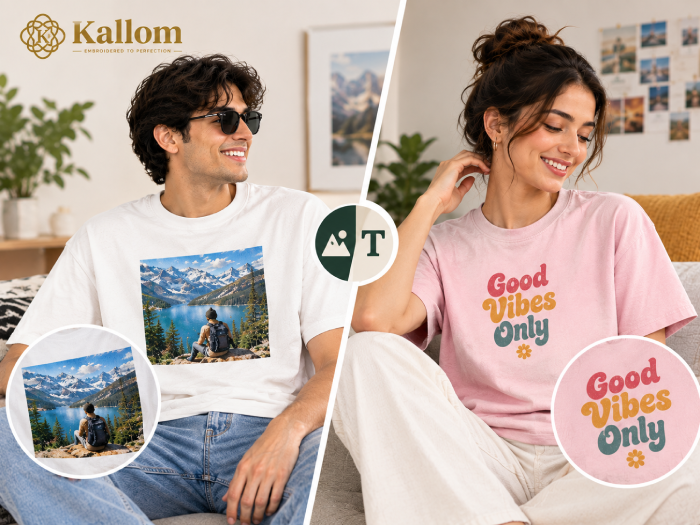
The type of design you're after changes what to prioritise when choosing where to order. A photo-based design needs a print method capable of handling detail and colour gradients cleanly, since a poor-quality print can turn a clear photo into a blurry mess once it's on fabric. If you're leaning toward this route, it's worth reading up on photo print tees specifically before ordering, since photo selection and placement affect the final result far more than people expect. Text-based designs are more forgiving, but still benefit from checking font clarity and colour contrast against the base garment colour, since even simple text can look muddy on the wrong background.
Why UK Shoppers Keep Coming Back to Kallom
Kallom's custom printed tees are built around getting the basics right rather than cutting corners to compete purely on price. Every print is made to order, with a live preview shown before production so you can see exactly how the design, colours, and placement will look before committing.
Pricing stays straightforward too, with most custom printed tees priced from around £19.99, free UK delivery on orders over £40, and most orders shipped within 2-3 days. If you're ready to see it for yourself, you can shop custom printed tees directly and check the live preview on any design before ordering.
Conclusion
"Best" doesn't have to mean expensive or complicated, it just means checking the right things before you order: fabric quality, print method, genuine customisation options, realistic pricing, and clear turnaround times. Get those basics right, and a custom printed tee stops being a gamble and starts being something you'll actually reach for on repeat, whether it's a one-off design or a matching set for a whole group.
None of this needs to feel overwhelming by the time you're actually placing an order. Most of it comes down to a handful of quick checks, fabric, print method, sizing, and a live preview rather than deep research into every site you come across. Once you know what to look for, spotting a genuinely good custom printed tee from a mediocre one becomes fairly quick, and the difference shows up the moment it actually arrives rather than months later when the print starts to fade.
Frequently Asked Questions.
How long does a custom printed tee usually take to arrive?
Most orders are printed and shipped within 2-3 days from the point of order, though it's always worth checking this directly with the seller before ordering if the tee is needed for a specific date, since busier periods around holidays or seasonal sales can sometimes extend the usual turnaround slightly.
Can I upload my own photo for a custom printed tee?
This depends entirely on the site you're ordering from; not every custom printing service offers genuine photo printing, and some only support text or template-based designs. It's worth confirming this specifically before assuming it's included, especially if a photo is the whole reason for the order in the first place.
Is print or embroidery better for a custom design?
It depends entirely on the design itself rather than one method being universally better. Print suits detailed, colourful, or photo-based artwork that needs fine gradients and shading to look right, while embroidery suits simpler text, initials, or logos that benefit from stitched, long-term durability over flat colour detail.
Does a higher price always mean better quality?
Not necessarily, and this is one of the most common misconceptions when buying custom printed tees online. A higher price is genuinely worth it when it reflects better fabric weight, a sharper print method, or proper hand-finishing but not when it simply reflects branding, packaging, or marketing rather than the product itself.
Can I return a custom printed tee if the size is wrong?
Yes, in most cases, though it's worth checking the specific returns policy before ordering, since personalised items sometimes carry different terms compared to standard, non-customised clothing. A simple, hassle-free exchange process for sizing issues is generally a good sign of a seller confident in their product quality.
Why does a live preview matter before production starts?
A live preview shows you exactly how the design, text, colours, and placement will actually look on the garment before it goes into production. This matters because it removes the guesswork entirely: you're approving something very close to the final result, rather than hoping it matches whatever you'd pictured in your head.